From specification to supplier list
Extract the products and services out of the technical specification, approve them, and the agent finds suppliers for exactly those items — with the comparable contracts they have already won.
Start from the technical specification or from a brief. The agent lists what you are buying, finds suppliers with the public contracts they have already won, and collects a sourced price per item — with its basis, its date, and whether the product actually meets your spec.
10 free credits with a new account (€60 value). No credit card required.
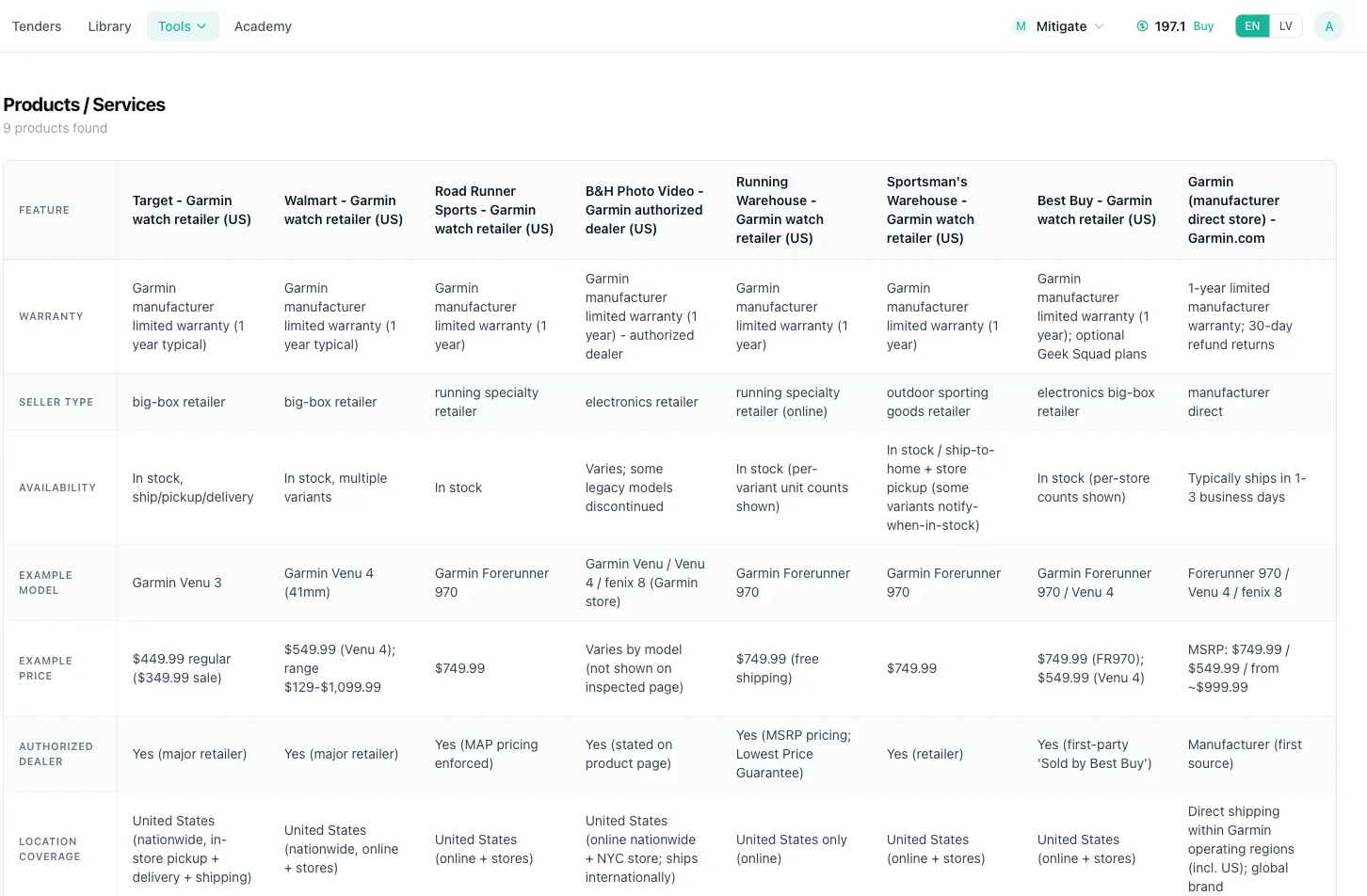
The agent searches the open market, then structures what it finds so you can compare options on the terms that matter to your procurement.
Extract the products and services out of the technical specification, approve them, and the agent finds suppliers for exactly those items — with the comparable contracts they have already won.
Each product is checked against your requirements — capacity, dimensions, ratings, certifications — with clear notes where it meets or falls short.
One row per price observation: supplier, product, price, whether it is a list price, a contract price, or a past award, and the date it was seen. Nothing is averaged or totalled — every number links to its source. Export it to Excel.
Findings link back to where the agent found them, so you can confirm a specification or a price at the source.
Instead of guessing what exists, you start the RFP knowing what the market offers, at what price, and against which certifications — grounded in sources you can check.
Extract what the procurement buys from the specification and approve the list — or write a brief for standalone research.
It finds matching products and suppliers across the market and checks each against your requirements.
Review the structured comparison and use it to shape a realistic specification.
Before writing the RFP, when you want to know what the market offers and at what price — and again once the specification is finished, to price the items in it.
The agent searches the open web and links each finding back to its source so you can verify it.
Yes. Give it your technical requirements and it flags where each product meets or misses them.
Define your requirements, let the agent survey the market, and start from a grounded comparison.
Research the market free